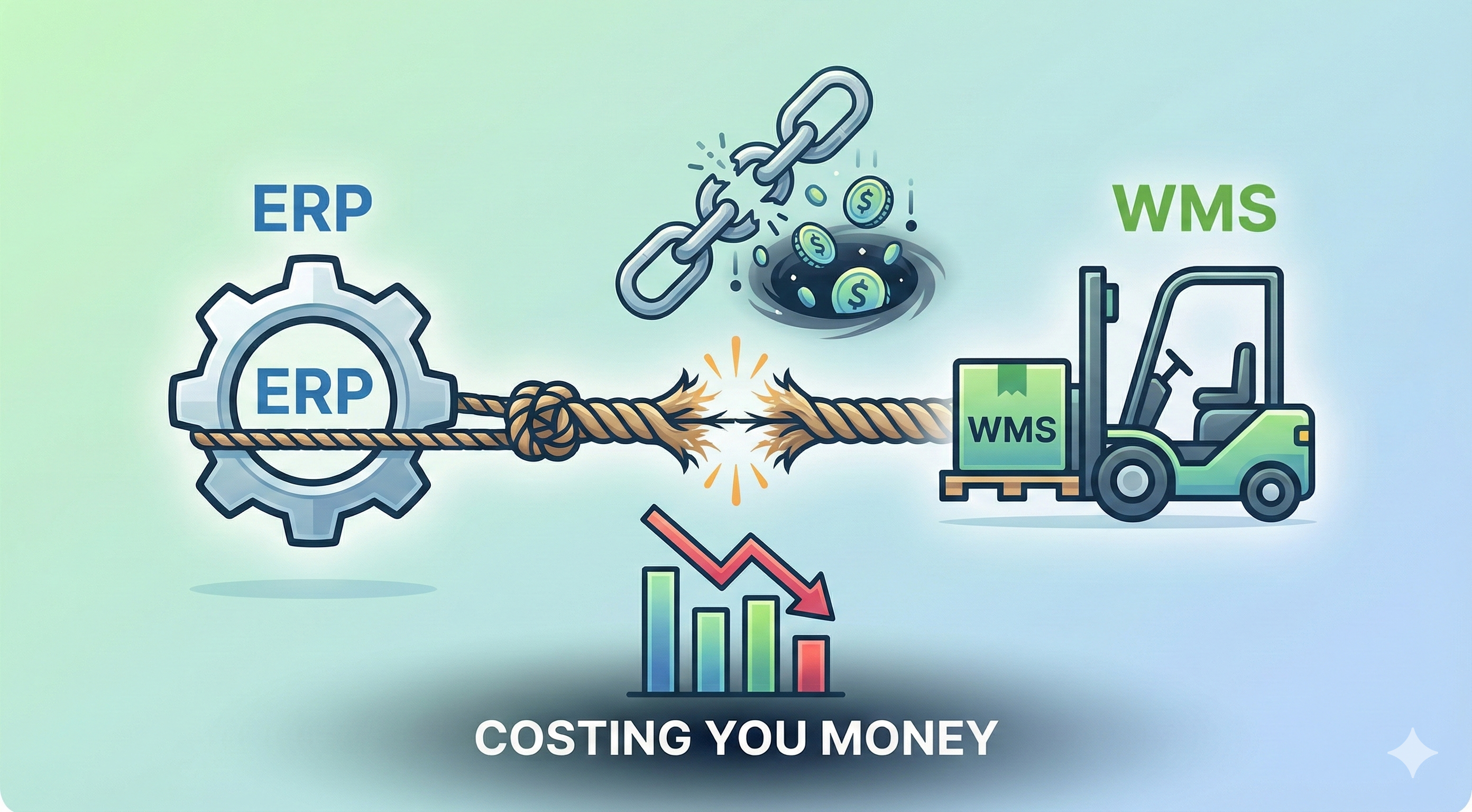
In most business contexts, 97% is an "A" grade. In warehouse management, it is a silent budget killer. While a 3% discrepancy might seem like a minor operational rounding error, for a mid-to-high volume facility, it represents a massive financial drain that impacts gross margins, working capital, and customer loyalty.
1. The Hidden Cost of the "Fix-It" Tax
Inventory inaccuracy is not just a data problem; it is a labor problem. When your system records don't match reality, your team spends "shadow hours" on non-productive tasks:
Wasted Picking Labor: Every time a picker arrives at a bin that the system says is full but is actually empty, you lose 10–20% in pick-rate efficiency.
Double-Checking Costs: To compensate for low trust in data, many warehouses implement costly manual double-checks or frequent, labor-intensive wall-to-wall stocktakes.
The "Hidden Shift": Rectifying a single shipping error can take 45–60 minutes of administrative and floor time—effectively paying staff to fix preventable mistakes.
2. Quantifying the Tangible Losses
Improving accuracy from 95% to 99%+ provides measurable financial returns:
Reduced Carrying Costs
Accurate tracking prevents "false stockouts" and over-ordering, often reducing inventory levels by up to 30%.
Lower Rework Expenses
Shipping the wrong item costs you three times: the original shipping cost, the return label, and the expedited replacement.
Improved Cash Flow
Real-time visibility unlocks working capital that would otherwise be frozen in safety stock or misplaced SKUs.
3. The Intangible ROI: Customer Lifetime Value
In a margin-compressed environment, your WMS is your best tool for customer retention.
Avoiding the "Amazon Effect": Modern customers expect 100% reliability. A single negative delivery experience due to an out-of-stock item can lead to a 40% customer churn rate.
SLA Compliance: For businesses serving major retailers or strict B2B contracts, 99.9% accuracy is often a contractual necessity to avoid heavy non-compliance penalties.
Summary: The Calculation
To find your potential ROI, multiply your annual error volume by your average cost per error. For most operations, the result is an eye-opening figure that justifies the investment in a modern WMS within months, not years.
Calculate Your ROI
Formula: Annual Error Volume × Average Cost Per Error = Your Hidden Loss
Talk to Dave, our AI assistant, to run a quick ROI analysis based on your current operation. Most warehouses see positive ROI within 3-6 months.