In Australian logistics, speed is vanity, but accuracy is sanity. A picker might move 100 items an hour, but if five of them are incorrect, the cost of returns, re-stocking, and damaged customer relationships wipes out those productivity gains immediately.
Most legacy Warehouse Management Systems (WMS) treat picking as a simple subtraction: "Take 5 from Location A." However, real-world operations are far more complex. Here is how modern warehousing strategies—and the eveXso architecture—tackle the root causes of picking errors at the source.
1. Distinguishing "Work" from "System Noise"
A common reporting error occurs when systems conflate physical labour with automated background tasks. If your reports show a user moving 500 items an hour, are they picking, or did the system just auto-complete a batch?
The eveXso Solution:
Our Move Attempt architecture records a specific move_attempt_type for every action. It distinguishes between:
- Physical actions: Like a
pickAttemptordePick(returning an item to the shelf). - System processes: Like
autoConsign, which runs in the background to update records.
By filtering out non-physical actions, you get a true picture of labour intensity. This allows you to identify pickers who are rushing and making mistakes, rather than those who are simply "moving data."
2. Enforcing Validation at the Point of Pick
The most basic error is picking the "wrong item that looks like the right item." Relying on visual checks in a high-pressure environment is a recipe for failure.
The eveXso Solution:
The mobile workflow includes a force_scan setting. When enabled:
- The "swipe-to-confirm" shortcut is disabled.
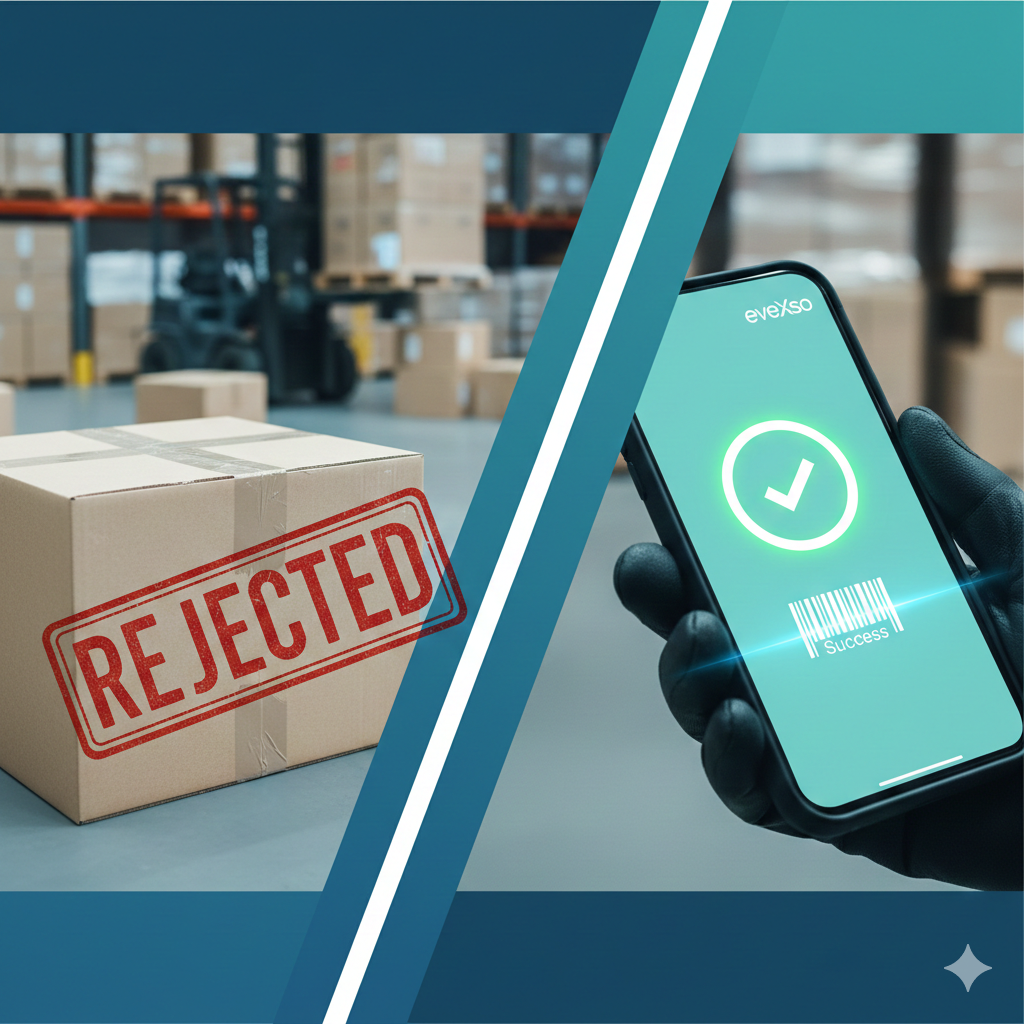
- The operator must scan the physical barcode using the device's camera or hardware.
- The
checkBarcodeScan()function validates the input against the expected inventory code in real-time.
If the barcode doesn't match, an error dialog appears that cannot be overridden, stopping the mistake before the item even hits the trolley.
3. Eliminating "Maths Errors" with Stocking Factors
A picker asked to pick "125 units" of a small item is highly likely to lose count. High cognitive load leads to high error rates.
The eveXso Solution:
eveXso utilises Stocking Factors to break down raw quantities into logical handling units based on the item's Unit of Measure (UOM). For a request of 125 items, the app won't just say "Pick 125." It displays:
2 Pallets + 2 Cartons + 5 Eaches
This allows the operator to pick distinct, easy-to-count objects, drastically reducing quantity errors and mental fatigue.
4. Managing Expiry: The "Right Product, Wrong Date"
For suppliers of major retailers like Woolworths or Coles, a correct product can still be rejected if it doesn't meet Minimum Life on Receipt (MLOR) contracts.
The eveXso Solution:
eveXso enforces these contracts in real-time during the pick. We use a visual traffic light system:
GREEN: Batches meeting the requirement are highlighted.
RED: Batches that are too old trigger a warning dialog requiring explicit confirmation.
GREY: Quarantined batches are hard-blocked.
This empowers pickers to make contract-compliant decisions without needing to memorise complex expiry rules for different customers.
5. Streamlining High-Volume Production (SSCC)
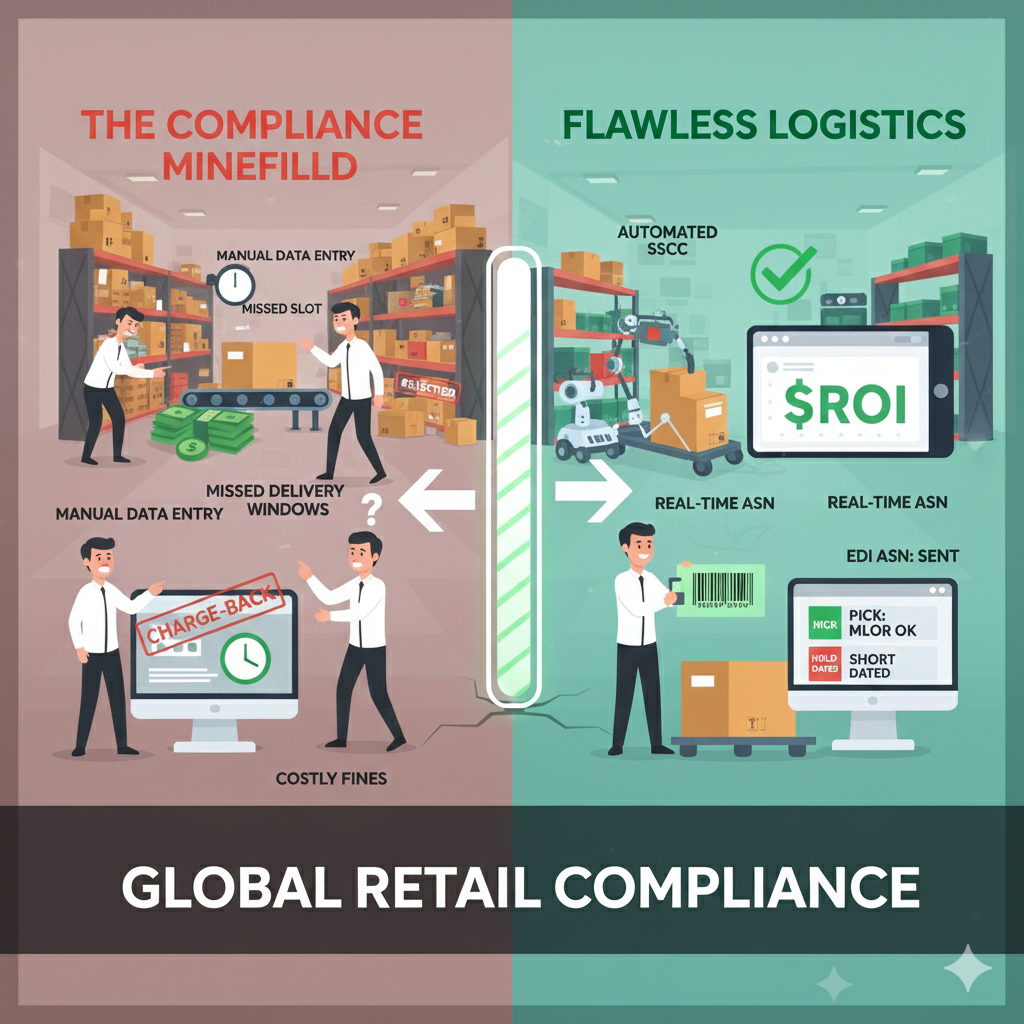
In high-volume environments, errors often occur during manual data entry. If a worker has to type in quantities and batch numbers for every pallet, typos are inevitable.
The eveXso Solution:
By integrating with SSCC (Serial Shipping Container Code) logistics, a production worker generates a single "License Plate" (Pack ID) for a pallet. When the picker arrives, they scan one barcode. The system instantly associates the entire quantity, batch, and expiry date. This "single scan" move eliminates the risk of data entry errors during dispatch.
The Bottom Line
Reducing errors isn't about telling staff to "be more careful." It is about implementing a system that digitises the decision-making process.
By validating scans, automating unit breakdowns, and enforcing contract dates visually, eveXso allows your team to focus on moving stock safely, while the system handles the details.
Ready to Eliminate Picking Errors?
From force scan validation to real-time MLOR enforcement, eveXso's mobile-first architecture stops mistakes at the source—not after they reach the customer.
Want to see these features in action? Our team can show you live examples of barcode validation, stocking factor breakdowns, and MLOR contract enforcement—or you can ask Dave (our AI assistant below) specific questions about reducing picking errors in your warehouse.